
Alysheia Shaw-Dansby
Safe and stable housing is critical to health, access to opportunity, and quality of life. In New York City, this stability is out of reach for many renters, especially those living in properties owned by neglectful landlords. In 2025, New York City tenants reported 835,011 housing maintenance problems, and more than 17,000 tenants were evicted.
On top of the challenges associated with struggling to pay rent and poor housing conditions, tenants may face further stressors, including concerns that new maintenance problems will arise and fears of landlord retaliation. This can make tenants feel powerless and isolated.
JustFix, a nonprofit based in Brooklyn, has developed powerful data and reporting tools to empower tenants experiencing code violations and threats of eviction. Over the last year with the support of a grant from the Local Data for Equitable Communities program, they expanded the capabilities of these tools, giving tenants across New York City information about their apartment buildings and helping them foster new relationships with their neighbors.
Breaking Social Barriers Through Data Access
JustFix created a clear and real-time reporting and alert system for tenants and housing advocates to identify and monitor building conditions. The system brings together relevant data on housing complaints, code violations, and eviction filings. These records are available on the NYC OpenData portal, but few people have the time and ability to clean, integrate, and analyze data.
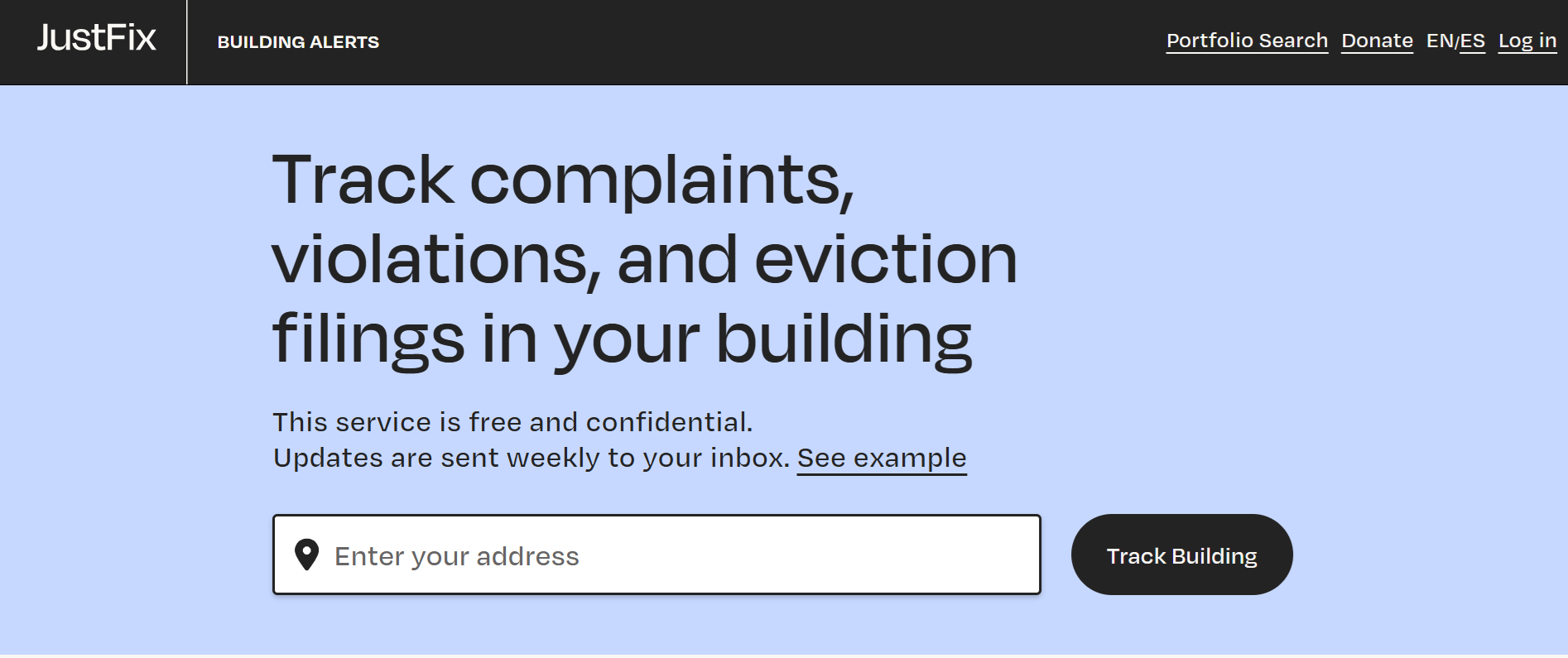
Two new platforms introduced by JustFix, Building Alerts and Area Alerts, aggregate and visualize these data so they are accessible to tenants and provide meaningful synthesis of trends in real-time. The Building Alerts platform allows tenants to enter their building address and receive updates on the number of tenant complaints made to the city, housing complaints and violations reported by the New York City Department of Housing Preservation and Development and NYC Department of Buildings, and eviction filings at their apartment building over the last week and month. As of August 15, 2026, more than 4,850 users had signed up for Building Alerts, noting that they were dealing with repair needs, landlord harassment, trouble making rent, and eviction threats.
JustFix’s Building Alerts Platform
JustFix’s Area Alerts Platform
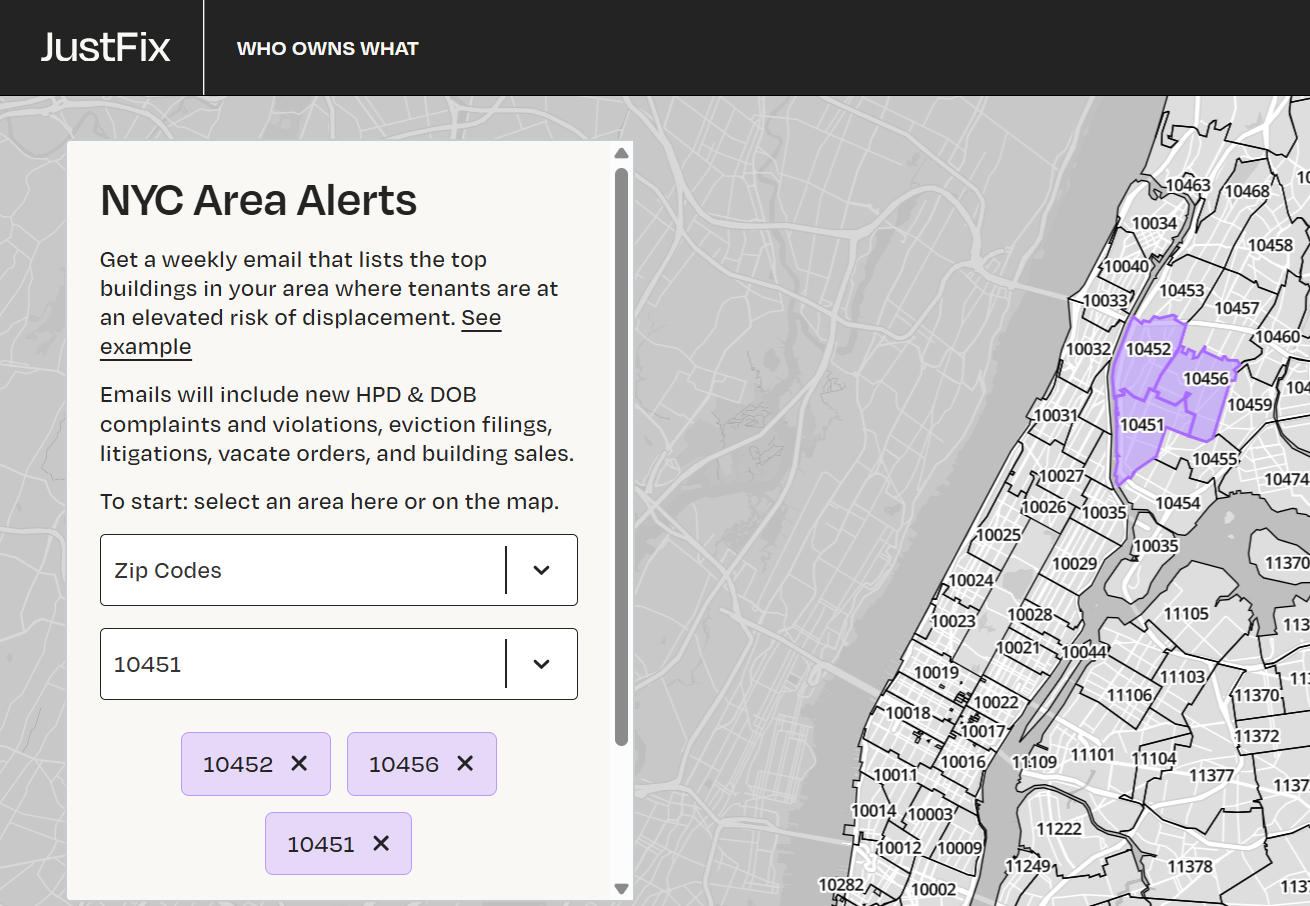
Residents can also sign up for the Area Alerts platform, which provides similar updates for the top buildings in a selected area, based on geographies of interest, where residents are at an elevated risk of displacement. Each week, Area Alerts reports buildings with the most 311 complaints in the users’ selected area, the number of eviction filings and litigation against landlords, and the portfolios to watch in cases where multiple buildings owned by one landlord experience concerning trends.
“The information from JustFix gives me a way to say ‘I’m not the only one dealing with this.’ It gives me confidence to report what’s going on because I see that other people are too.” — Central Harlem tenant dealing with chronic disrepair in subsidized housing
As evidenced by conversations between JustFix staff and tenants who signed up for alerts, these data fulfill a crucial need by breaking down barriers among neighbors in the same building, residents who live across the street, and tenants who rent from the same landlords blocks away from each other. When residents are equipped with data that are timely, delivered consistently, and easy to understand, it is possible to recognize trends that would otherwise be difficult to identify and initiate conversations with neighbors about shared experiences with landlord neglect and threats of eviction.
Taking Action to Combat Displacement Risk
As tenants facing these persistent challenges have formed new partnerships, they have opened new avenues to advocate for themselves and address systemic housing insecurity. In some cases, the alerts have given tenants the data and the confidence to confront their landlords. And when necessary, the data have strengthened tenants’ and tenant unions’ arguments in court.
“Building Alerts gave tenant leaders a way to legitimize what they were trying to do but were having challenges with … It gave them a system to take steps that led to better documentation of their issues.” — Tenant organizer in Central Brooklyn
The value of JustFix’s data infrastructure was evident in the recent success of the Union of Pinnacle Tenants. Spanning 93 properties across four New York City boroughs, the union was formed in 2025 after the property owner filed for bankruptcy and put its entire portfolio up for sale, prompting fears of further neglect and displacement. JustFix partnered with the union to pilot a new tool that supports tenant coordination with city health-code enforcement. With this tool, tenants document their repair needs, populating a centralized dashboard which union leaders use to coordinate inspections across buildings more effectively with the New York City Department of Housing Preservation and Development. This approach expands on the Building Alerts system, helping to identify and address root causes rather than isolated complaints, and improving how New Yorkers work with the city to improve conditions.
Sustaining Tenant Advocacy with Timely Data as a Foundation
JustFix staff expect to build on their early successes and continue to add to their suite of data-informed alerts to meet the evolving needs of tenants, organizers, and city government. As new users sign up for alerts, the tool will be more powerful for sustaining advocacy. More tenants will have knowledge of their own housing situations, understand the scope of mismanagement in their buildings, and have a starting point to initiate conversations and build relationships with their neighbors.
Some of the data and analysis that power these tools are unique to New York City, and the city’s strong tenant protection laws make the work of JustFix and their partners more feasible. But the success of JustFix’s platforms can provide a valuable model for tenant organizers and housing advocates nationwide who want to combat neglect and displacement in their own communities. In fact, similar data are publicly available and have been leveraged by housing advocates outside of New York City to create valuable analyses, such as Who Owns Massachusetts? and Landlord Mapper.
By taking the next step to bring data directly to tenants in a way that is accessible and consistent, advocates can equip residents with the evidence and the confidence to build sustainable advocacy movements that support housing safety and stability.