Alysheia Shaw-Dansby
The air we breathe, the soil beneath our feet, and the water we drink shape the environments where families thrive, children play, and communities take root. But for many, these elements of a healthy and safe environment are not guaranteed. Environmental health risk factors like exposure to pollution, heavy traffic, unsafe drinking water, and contaminated soil affect residents’ quality of life and can have serious long-term health consequences.
These hazards pose a threat to environmental justice, which the American Public Health Association describes as “the idea that all people and communities have the right to live and thrive in safe, healthy environments with equal environmental protections and meaningful involvement in these actions.”
In this fourth post in our Equity in Action series, we explore how communities can use local data to promote environmental justice and increase awareness of environmental hazards that disproportionately affect communities of color and those with low incomes. We feature five grantees who are engaging their communities in collecting evidence to fuel advocacy and address threats to community well-being.
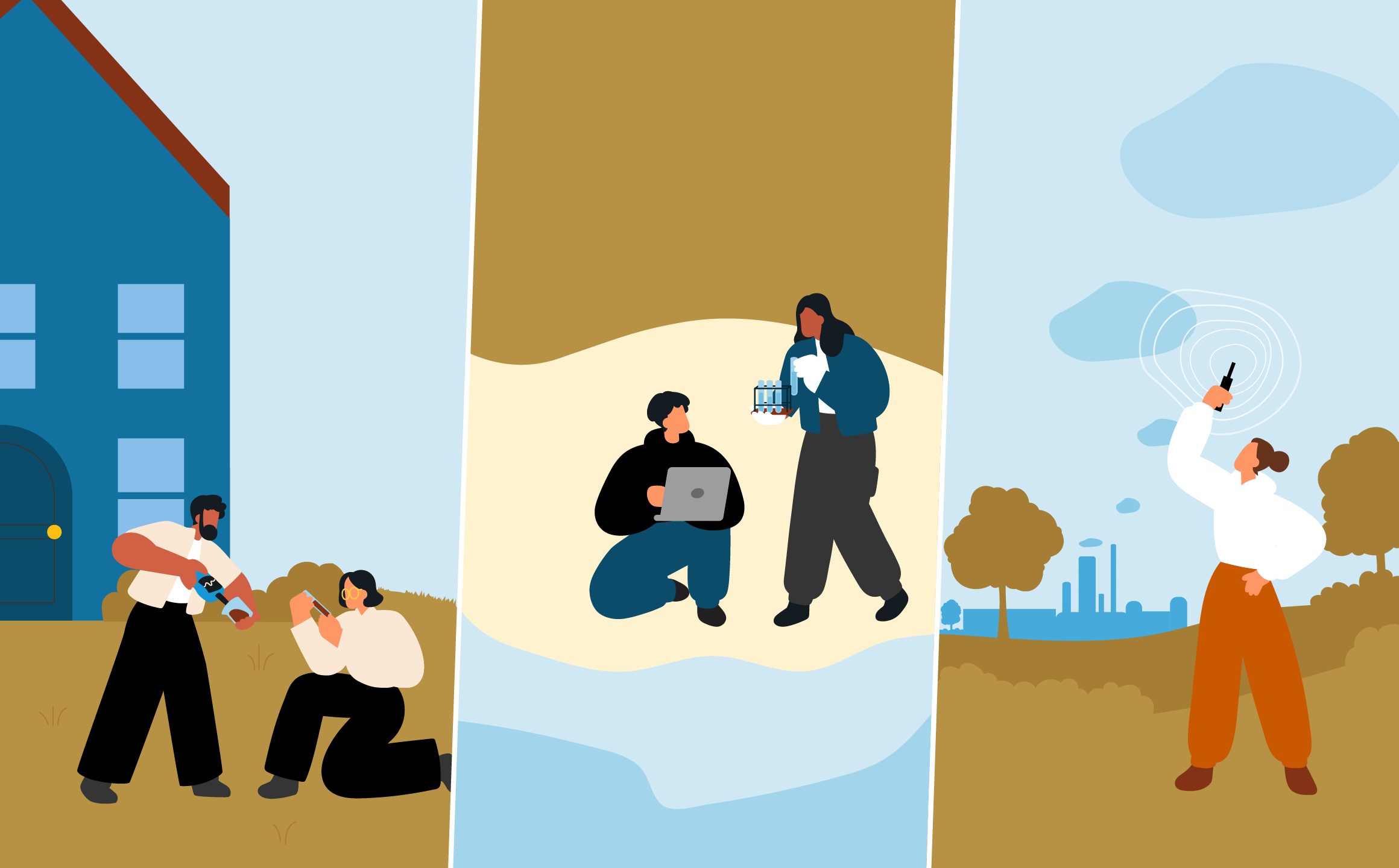
Two of the grantees are organizing community members to measure soil contamination caused by industrial pollution. Both grantees will use the data they collect to recommend actionable steps for soil remediation and public health solutions to state and local government agencies. In Buffalo, New York, Open Buffalo is training residents of the predominantly African American East Side community to expand soil testing for lead contamination. Because of its location downwind of a lead smelter that operated in the first half of the 20th century, preliminary testing revealed unsafe levels of lead in the soil. Open Buffalo will guide residents to conduct targeted soil sampling and discuss community-informed solutions to reduce the risks of exposure and advocate for soil remediation.
Toxic Free North Carolina, the North Carolina Environmental Justice Network, and a team of Durham partners are teaching community members to test soil for heavy metal contamination in the neighborhoods surrounding five Durham parks, all located on former municipal incinerator sites in predominantly low-income communities of color. Toxic Free North Carolina is helping residents understand how contaminated soil spread via construction projects and air pollution increase the risk of toxic exposure in their neighborhoods. The project team will analyze soil samples to publish a soil-quality dashboard and share data with residents.
Two other grantees are activating their communities to map sources of pollution. The North Carolina Environmental Justice Network is documenting air and water contamination and public health risks from swine and poultry feeding operations through participatory mapping. They are collaborating with local community activists fighting the concentrated animal feeding operations (CAFO) industry to identify the locations of biogas infrastructure, poultry CAFOs, and avian influenza outbreaks. Their insights will be used to create a dataset for community advocacy to provide communities information about the highest-priority locations for monitoring air and water quality and increasing transparency on poultry CAFOs.
Southwest Detroit Environmental Vision is working with residents to address the negative effects of high truck traffic on community health by identifying high-truck-traffic areas and documenting impacts on air quality. They will use these insights to collaborate with local leadership on strategies to address the harmful effects of high truck traffic, such as increased air pollution and hazardous conditions for pedestrians and cyclists.
Another grantee is documenting barriers to sewage system access that would reduce pollution. In Puerto Rico, Protectores de Cuencas is surveying residents to identify barriers to municipal sewage system access in the Guánica Bay watershed. The local watershed faces contamination from untreated sewage because the area lacks sewage infrastructure and many households do not have sewer connections. This pollution affects public health, marine ecosystems, and the livelihoods of local communities. Findings from the survey will inform recommendations to reduce the barriers for connecting community members to the system.
What These Communities Can Teach Us
These projects remind us that documenting environmental hazards can be an important first step in advocating for healthy communities for all. Across issue areas, organizations can mobilize their residents through data collection to build evidence that strengthens their advocacy and partner with local leaders to design strategies to redress environmental harms.
About the Initiative
The Local Data for Equitable Communities grant program, funded by the Robert Wood Johnson Foundation, is supporting 30 grantee organizations across the country to use local data and community experience to improve conditions specific to those places. These projects span rural and urban areas, engage a broad range of community members, and address such issues as environmental health, food access, housing and land use, climate sustainability, and justice.
Learn more about all the Local Data for Equitable Communities grantees.
Stay Connected
Sign up for the Housing and Communities Division newsletter to receive updates on this program and other work at the intersection of environmental justice and community development. Share this with a colleague who works in or follows this field.
Our next post in this series will share grantee projects focused on youth engagement. Stay tuned.